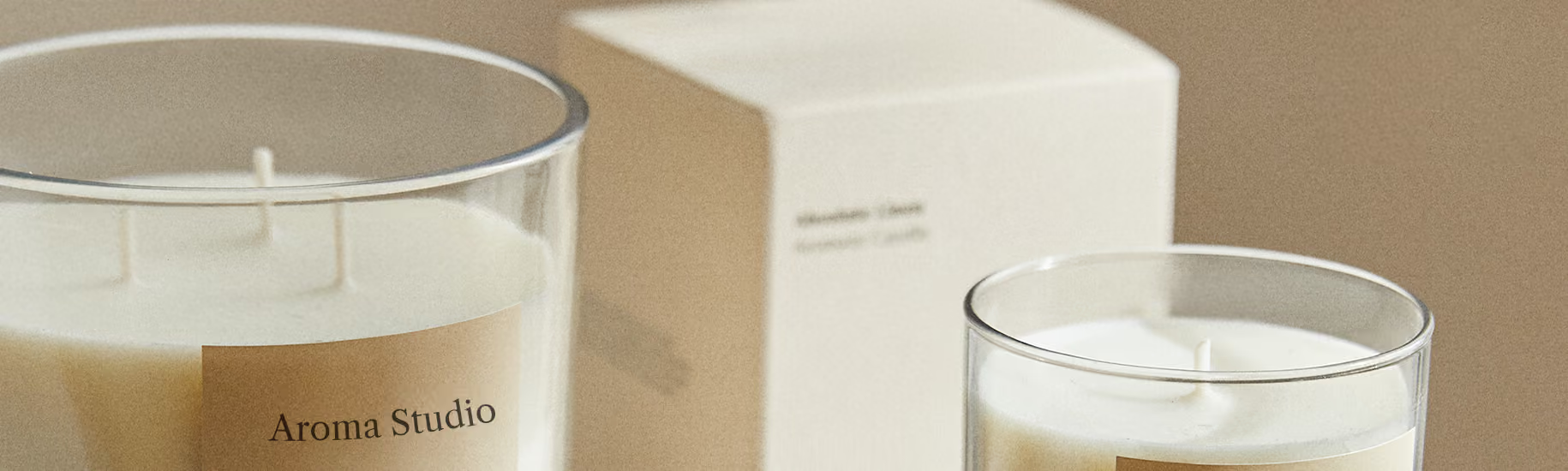
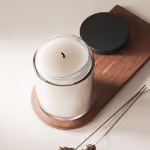
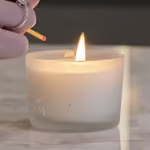
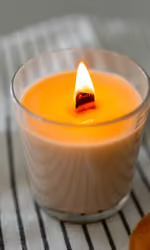
Just like layering perfume, burning two complementary candles together can create a fragrance combination that neither candle offers on its own. This practice, sometimes called candle layering, is an easy way to get more variety out of a small candle collection.
A good starting approach is to treat one candle as the base note, usually something warm and grounding like sandalwood, amber, or vanilla, and pair it with a lighter accent candle such as a floral or citrus scent. The base gives the combination depth, while the accent adds brightness on top.
If you are new to layering, it is easier to start with scents from related families. A woody candle and a warm spice candle, for example, are more likely to blend smoothly than two very different families like fresh linen and heavy musk, which can clash if burned side by side.
Burn the two candles a short distance apart rather than right next to each other, and allow some airflow in the room. This lets the two fragrances mingle naturally rather than overwhelming the space with concentrated, competing scents.
Warm, spiced combinations tend to suit cooler months, while fresh and citrus pairings feel more at home in spring and summer. Treat your candle collection the way you might think about a capsule wardrobe, with a few versatile scents that can be mixed and matched depending on the mood you want.
Try new combinations for short periods first, thirty minutes or so, before committing to a full evening. This makes it easy to notice whether a pairing works before you settle into it for the night.
.svg)
.svg)
.svg)



.svg)
.svg)
.svg)
.svg)
.svg)
.svg)